
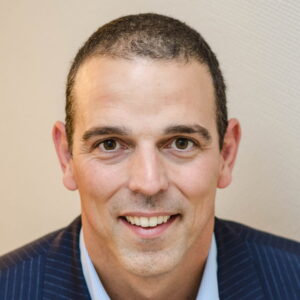
David Norré
PARCOURS
David Norré a suivi, après l’obtention de son diplôme de dentiste (K.U. Leuven, 2001), une MaNaMa en dentisterie restauratrice à la même université (sous la supervision du Prof. I. Naert, 2001–2005).
Son intérêt pour l’implantologie l’a conduit à l’ULg de Liège où, sous la supervision du Prof. Eric Rompen, il a suivi une formation de deux ans en implantologie orale (2006–2008). Après ce diplôme, il a réalisé un fellowship en chirurgie implantaire et parodontale avec Eric Van Dooren (Anvers, Belgique).
Depuis 2007, il est également professeur à l’Institut d’ostéo-intégration (KU Leuven) et donne de nombreuses conférences sur l’implantologie orale et la conception de piliers.
En parallèle de son activité clinique d’implantologue, il a mené des travaux de recherche au sein du département de parodontologie (KU Leuven) entre 2013 et 2020.
À partir de 2021, il devient professeur invité à la School of Dental Medicine de l’Université Tufts, à Boston, États-Unis.
FORMATIONS
Résumé de la formation Dental Congrès 2026 :
Restoration-Driven Implantology: The Full Digital Workflow
In recent years, dental implant placement has increasingly shifted toward a restoration-driven approach, emphasizing the importance of achieving optimal prosthetic outcomes from the very beginning of treatment planning. In this context, a fully digital workflow has emerged as a major trend, attracting significant attention among dental professionals. But what is the true purpose of digital integration in modern implantology? Is it simply a technological evolution, or does it represent a fundamental shift toward guided prosthodontics, enhancing precision and patient outcomes?
This comprehensive course provides an in-depth understanding of the full digital workflow, from initial surgical procedures to final prosthetic rehabilitation. Participants will explore the different components of the digital workflow and learn how to effectively integrate them into daily clinical practice.
By incorporating digital technologies, clinicians can significantly improve the precision, efficiency, and predictability of implant treatments. The course covers essential tools and techniques such as digital imaging, computer-aided design and manufacturing (CAD/CAM), and data fusion. Participants will understand how these technologies enhance diagnostic accuracy, treatment planning, surgical precision, and the quality of prosthetic restorations.
Learning Objectives:
• Understand the full digital workflow in implantology, from consultation and diagnosis to surgery and final prosthetic rehabilitation.
• Explore digital tools and technologies including digital imaging, CAD/CAM systems, 3D printing, and data fusion, and their impact on clinical outcomes.
• Develop practical skills to implement digital workflows seamlessly into daily dental practice.
• Enhance treatment planning accuracy, improve surgical precision, and optimize prosthetic results through digital integration.
• Evaluate the benefits of guided prosthodontics, including increased predictability, reduced chair time, and improved patient satisfaction.
By the end of this course, participants will have a comprehensive understanding of digital workflows in implantology and will be equipped with the knowledge and clinical tools necessary to successfully implement these advanced techniques. This approach ultimately leads to improved clinical outcomes, greater efficiency, and an enhanced patient experience.